How do I translate Spanish audio to English?
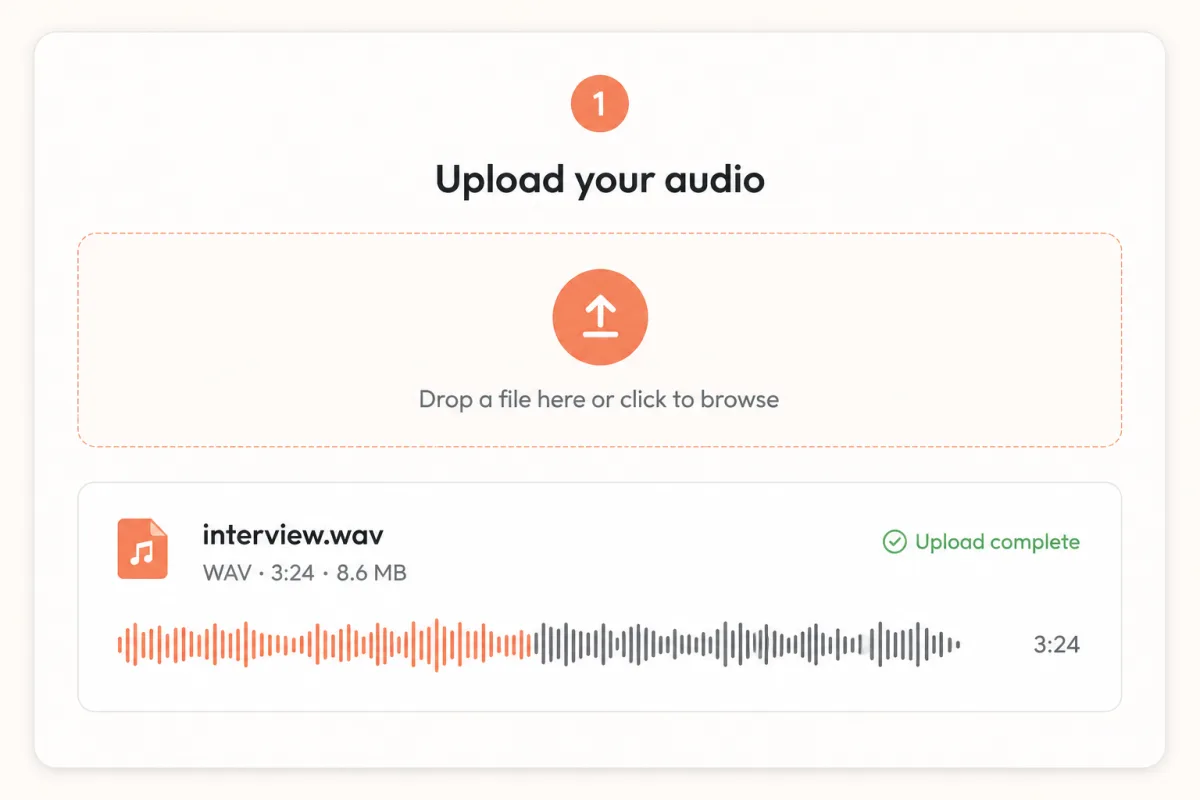
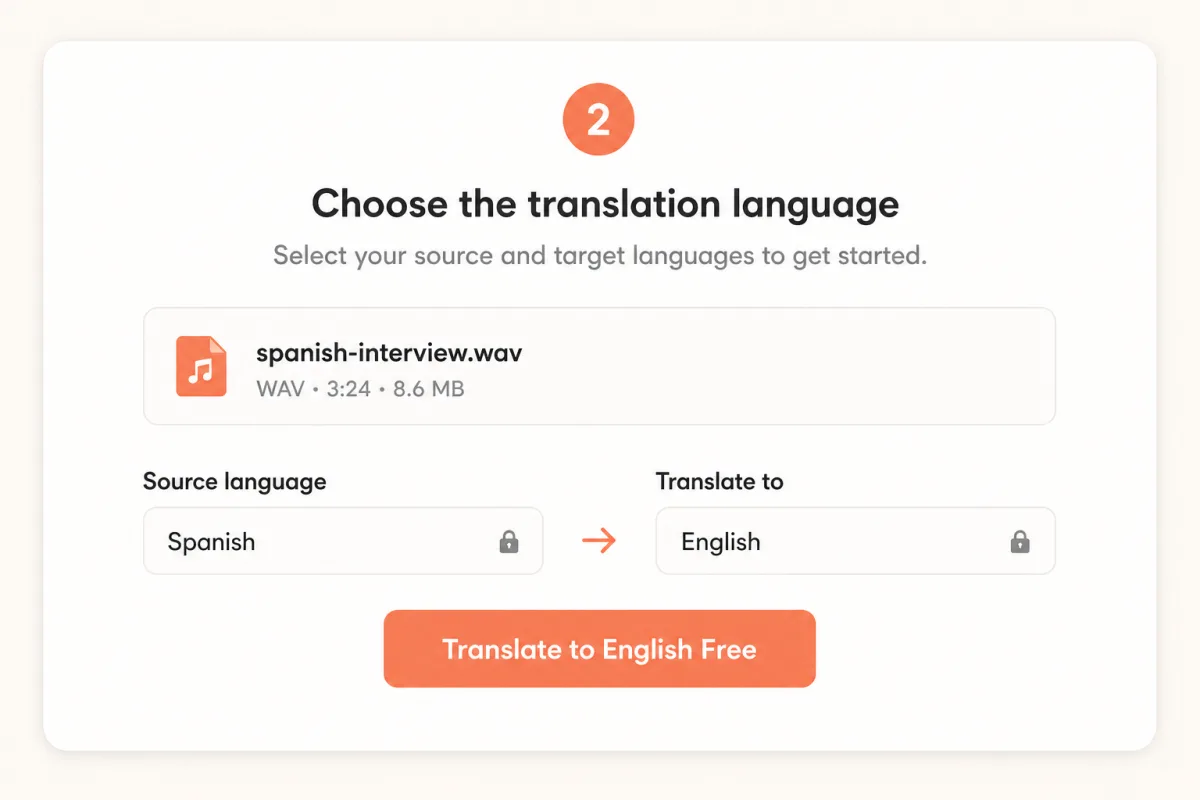
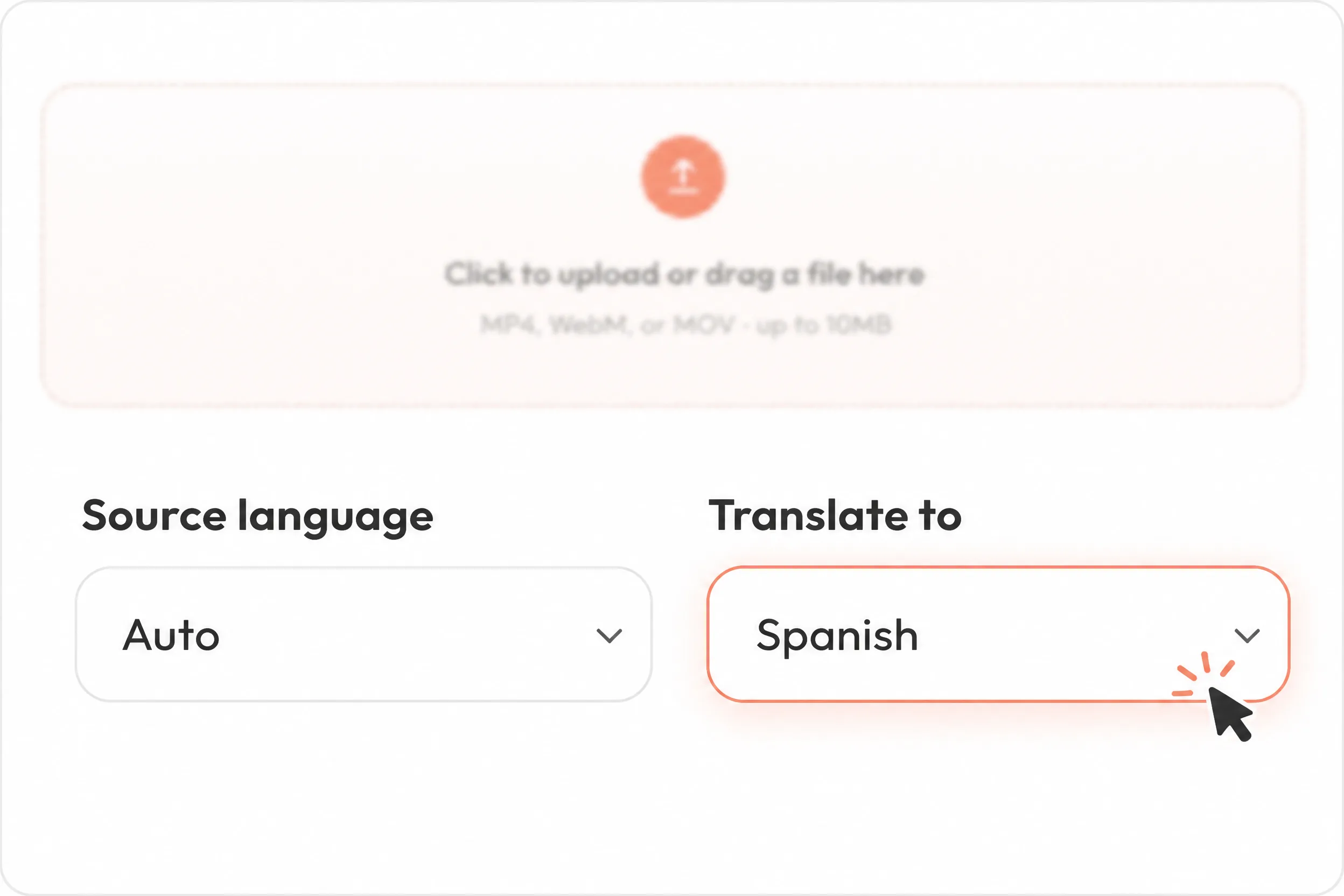
Upload the Spanish recording, keep English selected as the target, and select Translate. The tool transcribes the Spanish speech, translates it, generates spoken English, and returns an audio result for review.
Can I translate a Spanish MP3, WAV, or other recording?
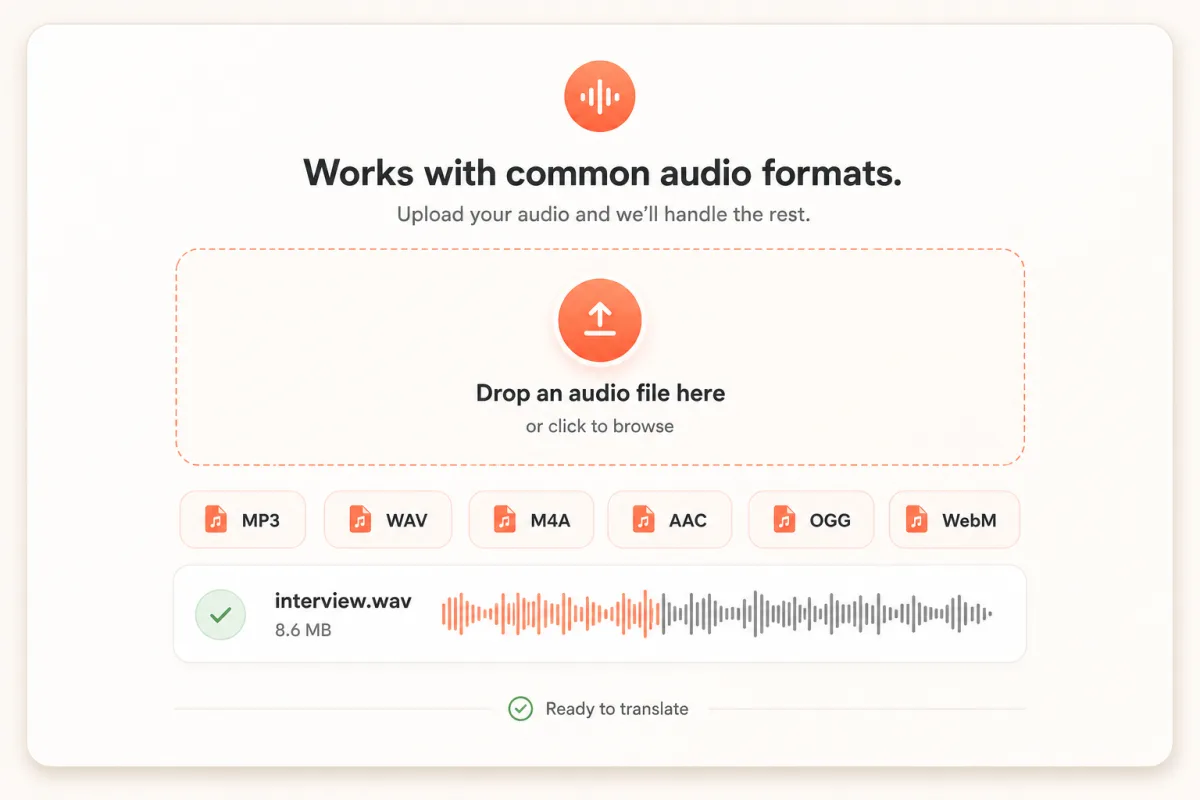
Yes. The Spanish to English voice translator accepts MP3, WAV, M4A, AAC, OGG, and WebM audio files up to 10MB during the launch phase.
Is the Spanish to English voice translator free online?
A new account includes free credits for trying the tool online. You can upload the recording and review the fixed Spanish-to-English direction before Google sign-in is requested at generation time.
Can the English result keep the Spanish speaker's voice and timing?
The dubbing model is designed to retain recognizable speaker characteristics and source-aware timing. Clear single-speaker recordings work best; overlapping speech, music, and background noise can reduce consistency.
Can the Spanish to English voice translator work in real time?
No. This page translates an uploaded recording and returns a new English audio file. It is not a live conversation interpreter, continuous microphone translator, or real-time call translator.
How accurate is Spanish to English voice translation?
Clear speech improves accuracy, but names, numbers, brand terms, and specialist vocabulary should always be reviewed before you publish the generated English audio.
Can I preview and download the translated English voice?
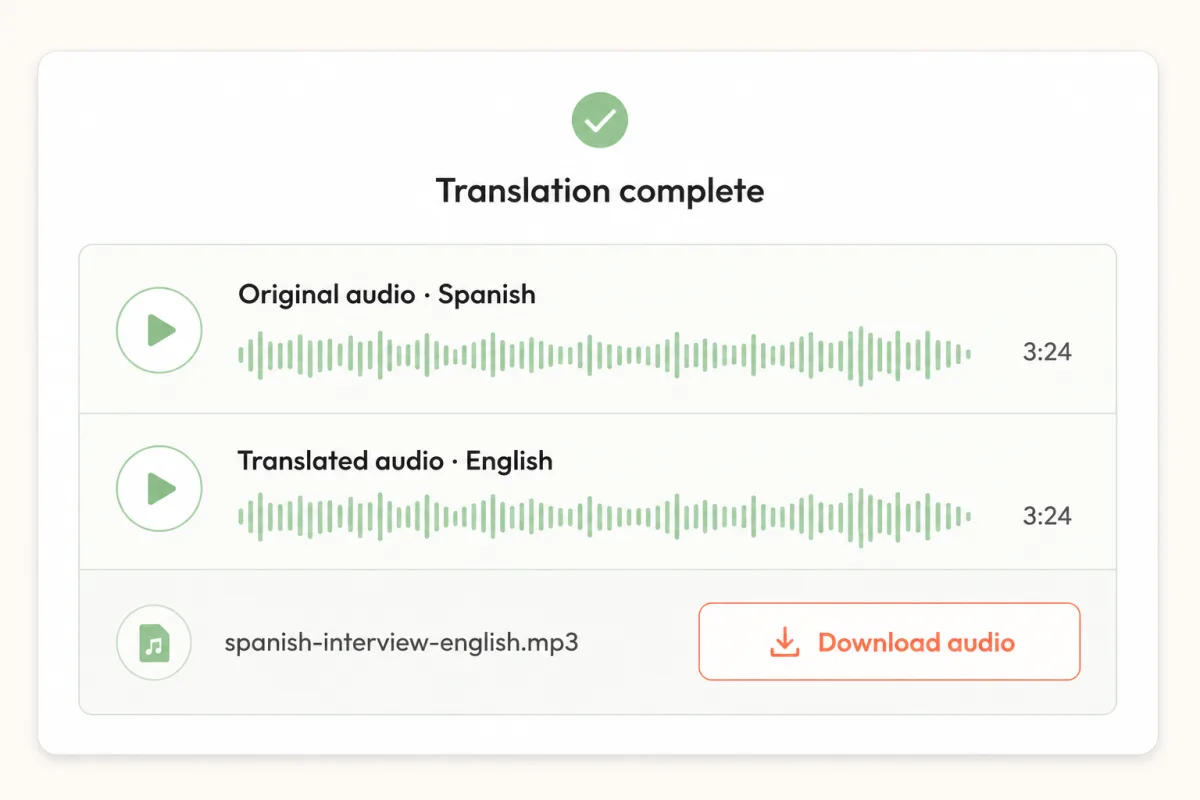
Yes. When processing finishes, the English result appears in an audio player with a download link and is added to your recent generation history.
What is the difference between a voice translator and a transcript?
A transcript returns written words. This Spanish to English translator voice workflow returns spoken English audio that you can listen to and download.
Which Spanish accents and dialects are supported?
The translator handles recordings from Spain, Mexico, and Latin America, including common regional accents and Spanish-English code-switching. Very fast speech, heavy slang, or strong background noise can reduce accuracy, so clean recordings give the best English output.
 AI Dubbing
  AI Video Translator
  Girl Voice Changer